Ellis Coleman · 12 September 2026
Rural Student Travel Subsidies Spark Debates on Equity Across Regional Polish Campuses
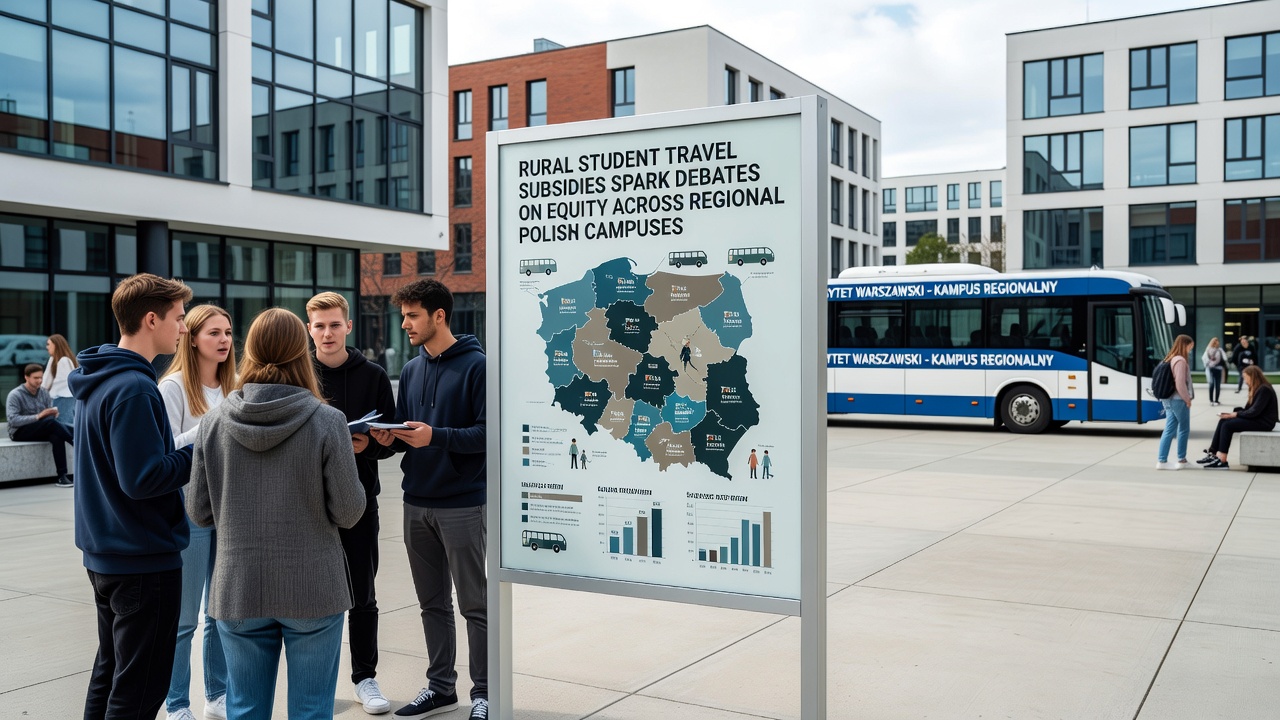
Poland's program offering travel subsidies to students from rural backgrounds has generated ongoing discussions about fairness in access across universities located outside major cities, and officials introduced the scheme several years ago to offset costs for train and bus journeys that often exceed several hundred kilometers each semester. Data from the Ministry of Science and Higher Education shows participation rates climbed steadily between 2023 and 2025, with over 28,000 students claiming reimbursements in the most recent academic cycle, yet regional institutions report uneven distribution of benefits that leaves some campuses with lower uptake than others.
Program Mechanics and Recent Expansions
Under current rules students living more than 50 kilometers from their chosen campus receive partial coverage for monthly or semester passes on public transport, and the system processes claims through university financial offices that verify addresses against official residency records. Starting in September 2026 the government plans to raise reimbursement ceilings by 15 percent while adding digital application portals that integrate with the national student ID database, moves expected to streamline processing for applicants from smaller villages in eastern and southern voivodeships. Those who have tracked enrollment patterns note that universities in Lublin, Rzeszów and Olsztyn saw the sharpest rises in rural applicants after the initial rollout, whereas institutions closer to Warsaw experienced more modest shifts because many students there already commute shorter distances.
Equity Questions Surface at Regional Campuses
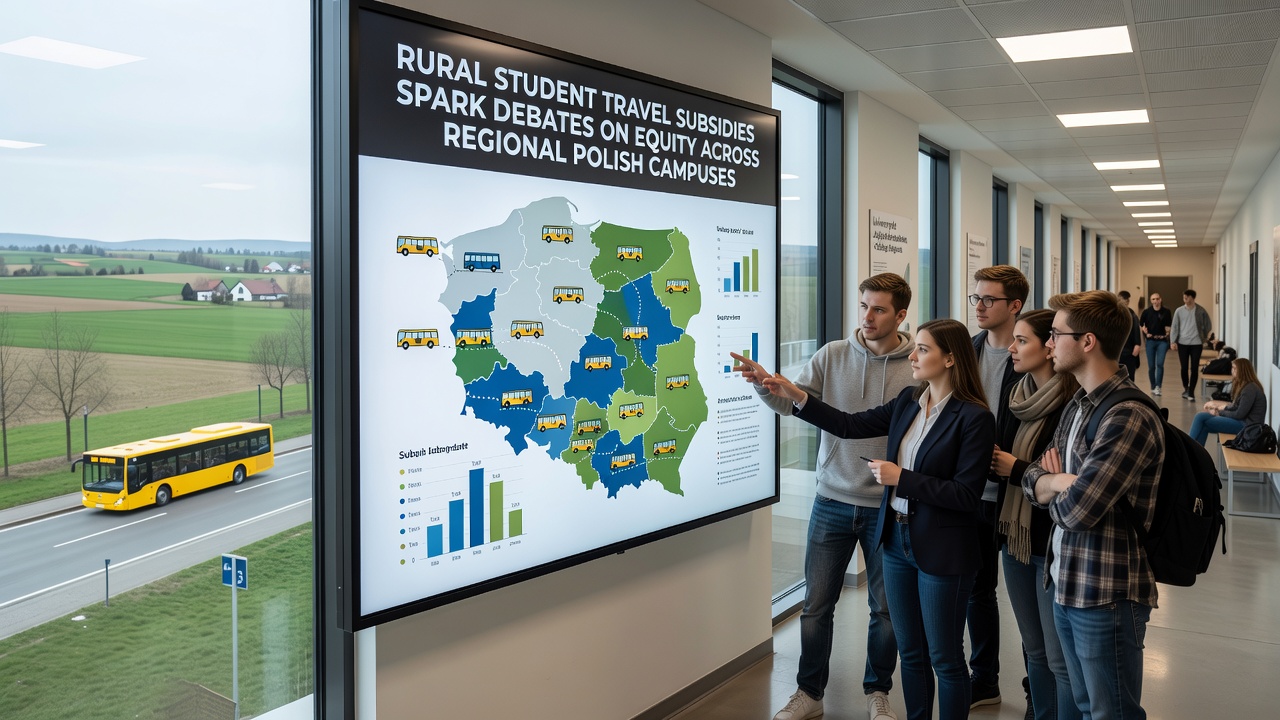
Administrators at universities in smaller cities point out that rural students still face additional barriers such as limited high-speed rail connections and infrequent bus schedules, factors that reduce the practical value of the subsidy even when financial support arrives. A 2025 report compiled by the Conference of Rectors of Academic Schools in Poland indicates that 62 percent of subsidy recipients attend institutions in the eastern half of the country, prompting questions about whether allocation formulas adequately account for infrastructure gaps in western and northern regions. Observers at the University of Warmia and Mazury, for example, documented cases where students traveled up to four hours each way on routes with only two daily departures, and similar patterns appear in Podkarpackie province where mountainous terrain complicates winter travel.
Debates have intensified around whether subsidies should extend to private transport options or housing stipends that would allow students to relocate closer to campus, and representatives from student organizations in Kraków and Poznań argue that the current model favors those already near rail hubs. Figures released by the Central Statistical Office reveal that rural high-school graduates from counties without direct intercity rail links apply to regional universities at rates 22 percent lower than peers from better-connected areas, suggesting the subsidy alone does not fully level the playing field. Researchers who examined application data across five voivodeships found correlations between subsidy uptake and proximity to major transport corridors, a pattern that continues to fuel calls for targeted infrastructure investments alongside financial aid.
Comparative Experiences Across Campuses
At the University of Gdańsk rural enrollment grew 18 percent after subsidies began, yet staff there note persistent gaps for students from inland villages who must combine multiple modes of transport. In contrast, the University of Białystok reported that nearly 40 percent of its subsidy users come from villages within 80 kilometers, a group that benefits from more frequent connections along the eastern corridor. Data compiled by the European University Association shows similar subsidy programs in neighboring countries achieve higher equity metrics when paired with regional bus network upgrades, and Polish officials have referenced those findings while drafting the 2026 adjustments. One study released by the Polish Academy of Sciences tracked 1,200 rural students over two years and found that those receiving full fare coverage maintained higher attendance rates, although completion gaps remained between urban and rural cohorts even after accounting for travel support.
Campus administrators in Opole and Kielce describe administrative burdens that include verifying addresses for students whose families moved during secondary school, situations that sometimes delay reimbursements by several weeks. Meanwhile the National Agency for Academic Exchange published guidelines in early 2025 that encourage universities to bundle subsidy information with orientation materials, an approach already adopted at several regional sites with measurable increases in first-year applications from rural postcodes. Those who monitor policy outcomes emphasize that while the program has expanded access, sustained equity gains depend on coordinated improvements in both transport and digital application systems ahead of the September 2026 changes.
Conclusion
Poland's rural student travel subsidy continues to shape enrollment patterns at regional campuses, and upcoming expansions scheduled for September 2026 aim to address documented disparities in uptake and infrastructure access. Ongoing data collection by government agencies and university consortia will determine whether adjustments achieve broader equity across different geographic and transport contexts.