Ellis Coleman · 24 October 2026
Silesian Technical Schools Test Blockchain Networks for Lab Equipment Sharing via Student Cooperatives
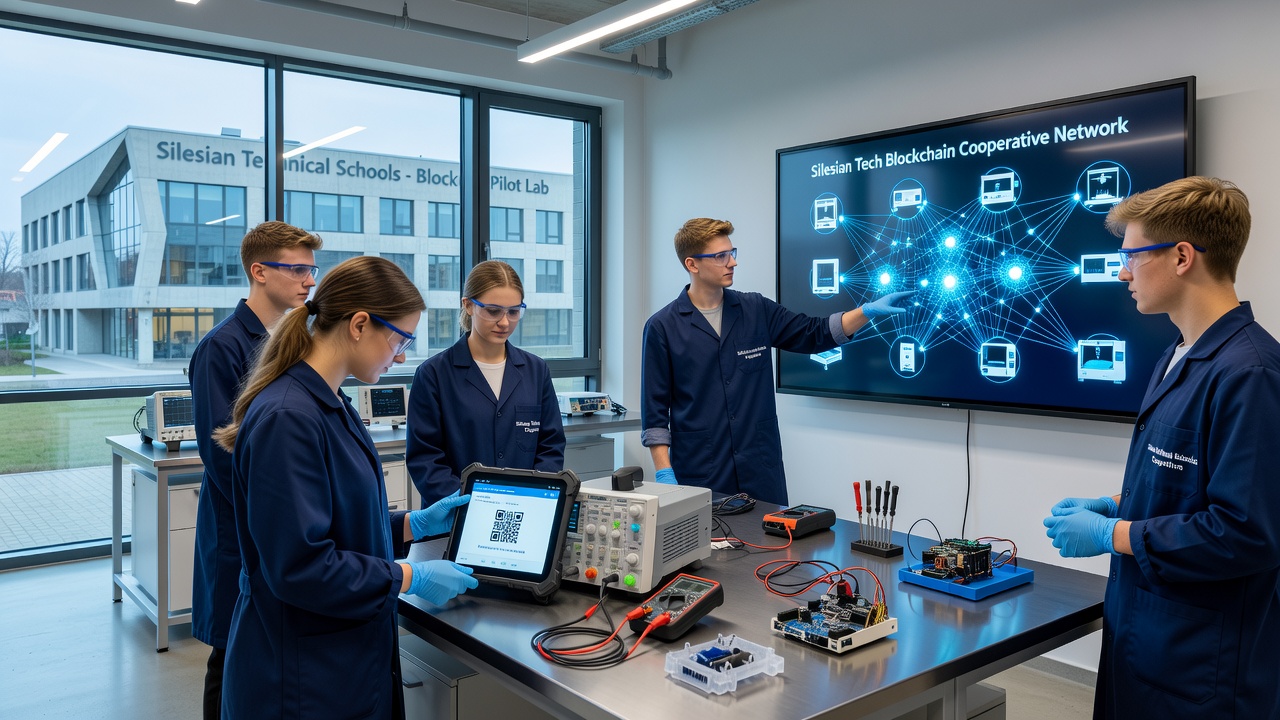
Technical schools across the Silesian region have rolled out a pilot program that lets student cooperatives handle lab equipment reservations through a blockchain ledger, and the effort began gaining traction during October 2026. The system records every booking, return, and maintenance check on a distributed network that multiple schools can access without a central administrator. Cooperatives formed by students at institutions such as the Silesian University of Technology and nearby vocational colleges manage day-to-day operations, while the underlying technology ensures that no single party can alter usage histories.
Origins of the Cooperative Model in Regional Technical Education
Student cooperatives in Silesia trace their structure to long-standing vocational training traditions that encourage groups of learners to share responsibility for workshops and tools. These groups already coordinated equipment calendars on paper or basic spreadsheets before the blockchain trial, yet frequent disputes over priority and lost records prompted several schools to explore digital alternatives. In October 2026 the regional education authority approved funding that allowed three cooperatives to integrate a permissioned blockchain maintained by participating institutions. Each cooperative received training on node operation, smart-contract deployment, and dispute resolution procedures built into the ledger.
How the Blockchain Reservation System Functions
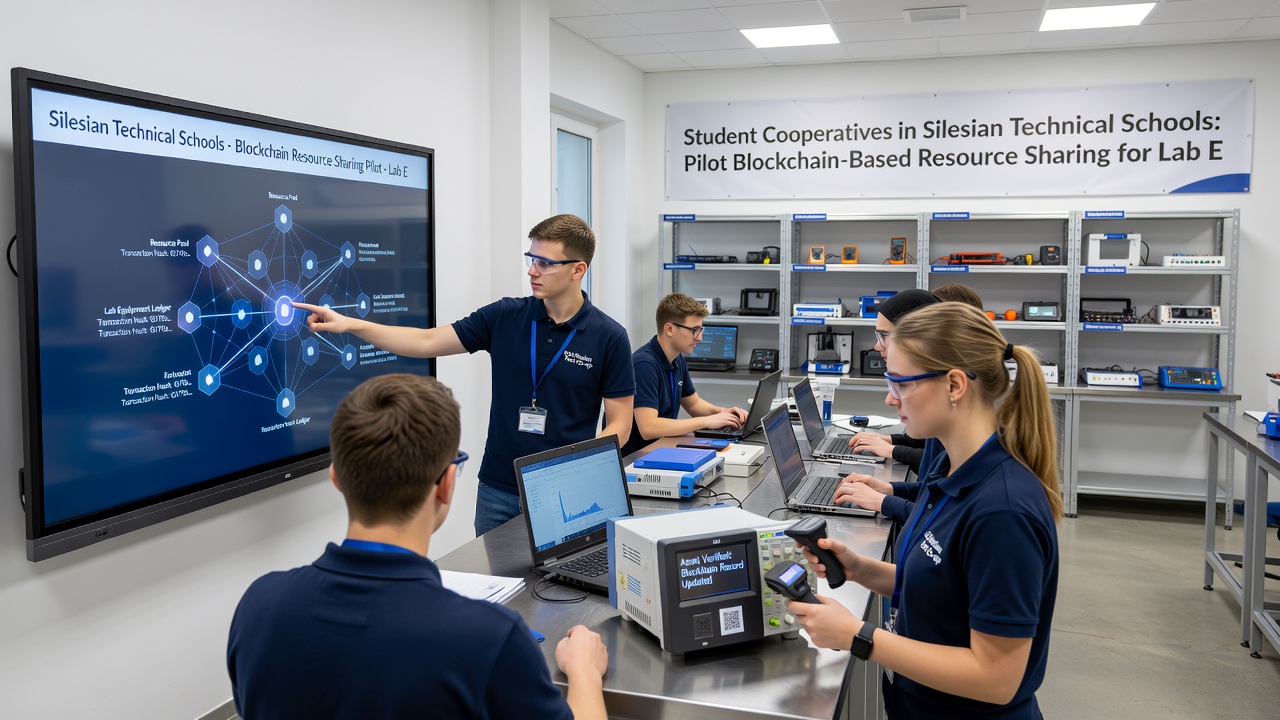
Participants log into a web portal connected to the shared ledger, select available equipment, and submit a reservation request that the smart contract validates against current usage data. Once approved, the transaction receives a timestamp and becomes visible to all authorized nodes, which include representatives from each cooperative and designated faculty advisors. Equipment check-out and return trigger additional entries that update the asset status and trigger maintenance alerts when usage thresholds are reached. Because every entry carries cryptographic signatures, observers note that attempts to double-book items or conceal damage become detectable across the network within minutes.
Implementation Timeline and October 2026 Milestones
Development work started in early 2026 with a proof-of-concept phase limited to one school, after which the project expanded to include two additional cooperatives. By October 2026 the pilot covered spectroscopy units, CNC milling machines, and portable oscilloscopes valued at over 400,000 euros in total. Daily transaction volume averaged 180 entries, according to logs published by the coordinating cooperative at the Silesian University of Technology. The system runs on a private Ethereum-compatible chain operated by the schools themselves rather than an external provider, which reduces latency and keeps data within regional jurisdiction.
Resource Allocation Data and Usage Patterns
Figures released after the first three months of full operation show that equipment utilization rose from 62 percent to 81 percent across the three participating sites. Cooperatives report fewer instances of equipment left unreturned overnight, because the ledger automatically flags overdue items and notifies the responsible student group. A separate study conducted by researchers at the AGH University of Science and Technology in Kraków examined transaction throughput and found that the network sustained 12 transactions per second during peak afternoon hours without requiring additional nodes. The same study noted that average reservation lead time dropped from 48 hours under the previous spreadsheet system to under 4 hours once the blockchain portal went live.
Links to Broader European Digital Education Efforts
The Silesian pilot aligns with guidelines issued by the European Commission on the use of distributed ledger technology in public education settings, which encourage member states to test transparent resource management tools. One European Commission policy document outlines criteria for permissioned networks that preserve data sovereignty while enabling cross-institution collaboration. Observers also point to a Canadian report from the Council of Ministers of Education that evaluated similar cooperative models in technical colleges, highlighting comparable gains in equipment availability when digital ledgers replaced manual sign-up sheets.
Operational Challenges Encountered During Rollout
Early weeks revealed that some students lacked familiarity with wallet addresses and transaction signing, prompting cooperatives to run additional workshops. Network outages at one site in September 2026 temporarily halted new reservations until administrators restored connectivity through redundant internet links. Faculty members raised questions about liability when a smart-contract rule automatically extended a reservation beyond the original agreement, and the cooperatives responded by adding an override clause that requires two human approvals before any change takes effect. These adjustments illustrate how the pilot continues to evolve through iterative feedback rather than remaining static after launch.
Future Expansion Plans Discussed by Regional Stakeholders
School administrators and cooperative leaders have begun discussing the addition of 3D printers and laser cutters once the current ledger proves stable through the remainder of the 2026 academic year. Plans also include integration with an existing campus inventory database so that consumable materials such as filament or calibration gases appear alongside equipment availability. A fourth cooperative from a technical lyceum in Gliwice has expressed interest in joining the network, which would require only the installation of one additional validator node and a short onboarding period for its members.
Conclusion
The Silesian technical schools blockchain pilot demonstrates how student cooperatives can operate distributed resource systems while maintaining transparent records that multiple institutions trust. Data collected through October 2026 indicates higher utilization rates and fewer scheduling conflicts compared with prior manual methods. Continued monitoring and incremental feature additions will determine whether the model spreads to additional regions or remains a localized experiment in cooperative equipment management.